
Introduction
Qatar’s economy continues to be driven by complex projects across energy, infrastructure, construction, technology and economic diversification, creating an environment where strong project management skills remain highly relevant.
Major national initiatives are continuing beyond the FIFA World Cup era. Qatar’s official development plans include infrastructure development, economic diversification, expansion of LNG production through the North Field projects, and efforts to attract further private and foreign investment. These initiatives form part of the country’s long-term development under Qatar National Vision 2030.
For professionals working in project-based roles, the Project Management Professional (PMP)® certification is one of the internationally recognized credentials available for demonstrating project leadership experience and project management knowledge.
But is PMP actually valuable for someone working in Qatar? What kind of jobs can PMP-qualified professionals pursue? How much do project managers earn in Qatar, and what are the eligibility requirements for certification?
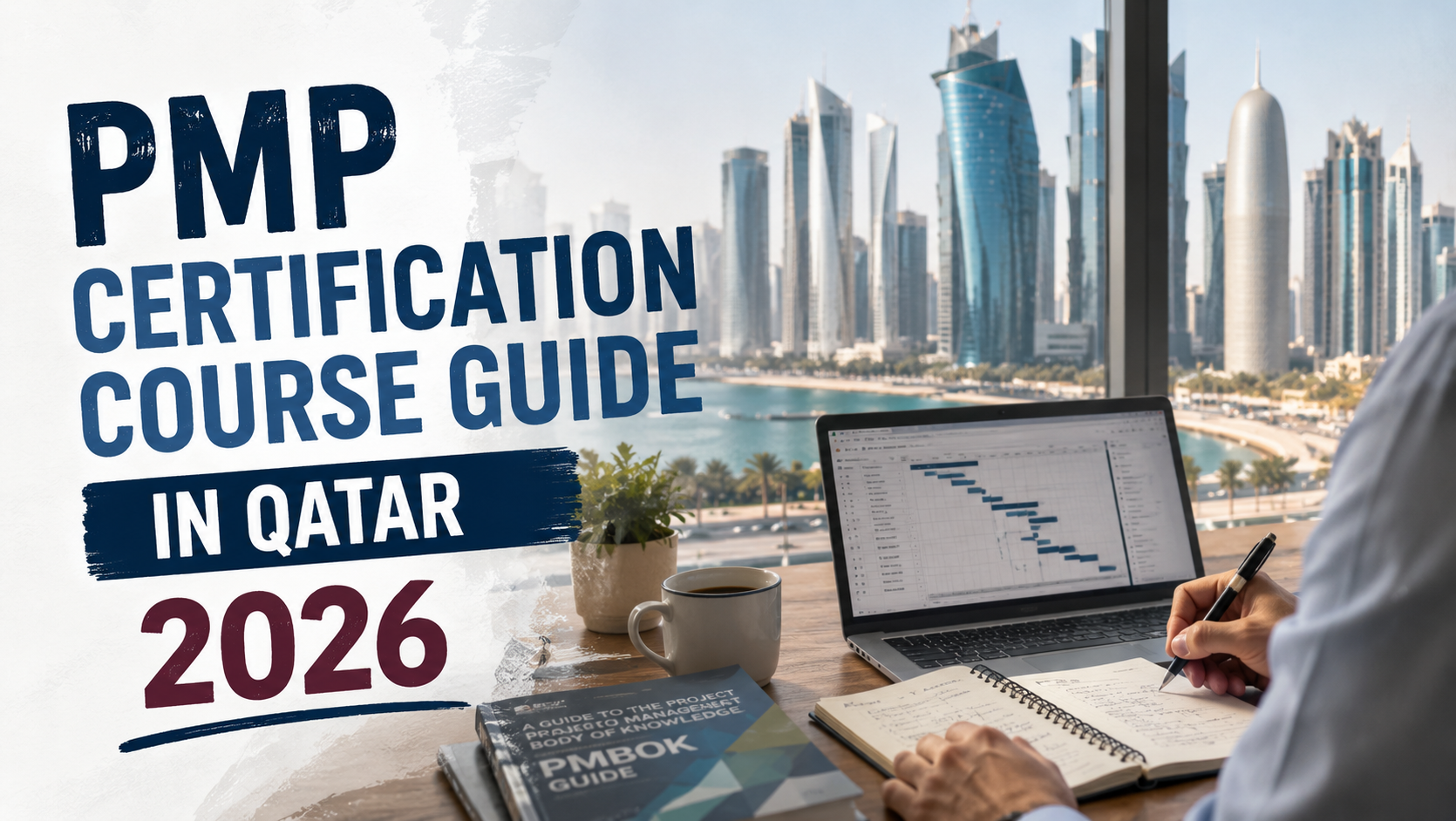
This guide explores the PMP certification course in Qatar, including career opportunities, salary data, eligibility, the latest PMP exam changes, and how professionals can prepare for certification in 2026.
What Is PMP Certification?
The Project Management Professional (PMP)® is a professional certification offered by the Project Management Institute (PMI).
Unlike an entry-level project management qualification, PMP is intended primarily for professionals who already have project leadership experience. The certification assesses a candidate’s ability to manage the people, processes and business priorities involved in delivering projects successfully.
One of PMP’s key characteristics is that it is not limited to a single industry.
Project management principles can be applied across construction, engineering, energy, IT, healthcare, finance, consulting, telecommunications and other project-driven sectors. This makes the qualification particularly relevant in a diverse economy such as Qatar, where major organizations manage complex projects involving multiple contractors, stakeholders, budgets and deadlines.
The certification also covers different ways of managing projects, including predictive, agile and hybrid approaches, rather than focusing on only one project management methodology.
According to PMI’s latest Salary Survey, PMP-certified respondents reported a 17% higher median salary than non-certified respondents across the 21 countries surveyed. This should not be interpreted as a guaranteed 17% salary increase from obtaining PMP—experience, role, industry and geography also affect earnings—but it provides useful evidence of the certification’s association with career earning potential internationally.
Why PMP Is Relevant in Qatar’s Job Market
Qatar’s economy is heavily influenced by large-scale projects across energy, construction, infrastructure, technology, transportation, tourism and other developing sectors. For professionals working in these project-driven environments, the ability to manage budgets, timelines, teams, risks and stakeholders can be an important career skill.
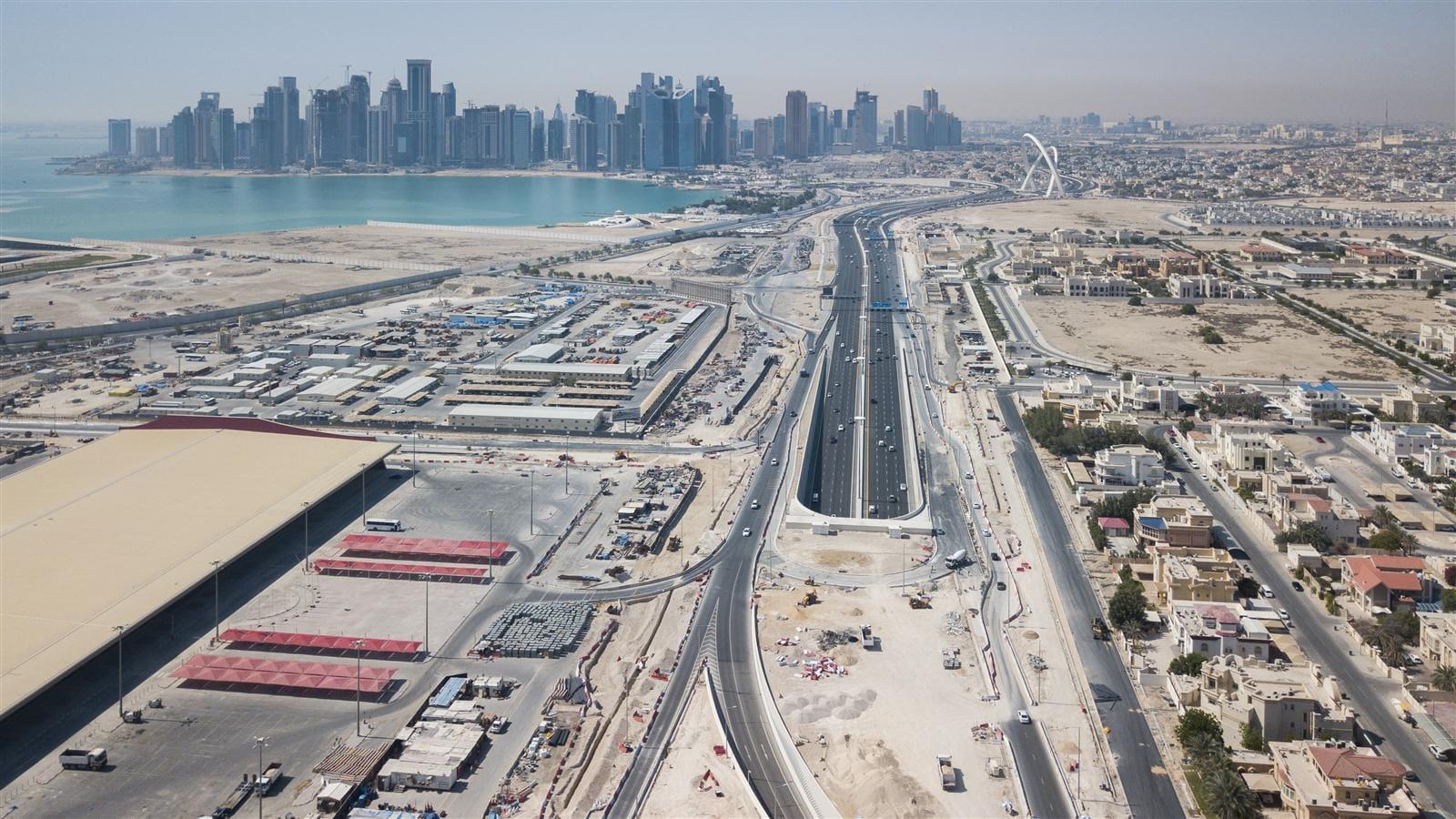
Importantly, Qatar’s project activity did not end with the completion of major infrastructure for the 2022 FIFA World Cup. The country has entered the final phase of Qatar National Vision 2030, supported by the Third National Development Strategy 2024–2030, which sets targets for economic diversification, private-sector growth, digital competitiveness and productivity.
One notable target is to achieve an average 4% annual growth in non-hydrocarbon GDP through 2030, highlighting Qatar’s continued focus on developing industries beyond oil and gas.
Qatar National Vision 2030 – Economic Development
At the same time, Qatar continues to undertake major projects in its core energy sector.
Major Energy Projects Continue to Drive Project Activity
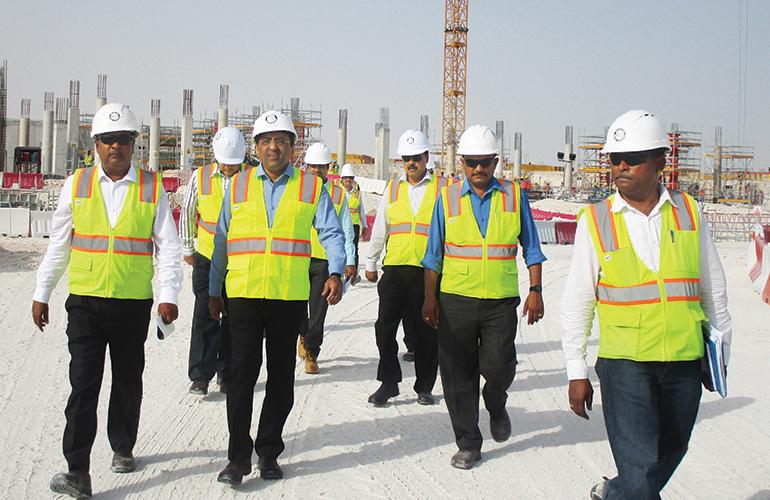
Qatar’s North Field LNG expansion is one of the clearest examples of the scale of projects being developed in the country.
QatarEnergy has been expanding LNG production through the North Field East, North Field South and North Field West developments. In February 2026, it awarded the engineering, procurement and construction contract for the North Field West project, designed to add another 16 million tonnes per annum (MTPA) of LNG production capacity.
QatarEnergy – North Field West Project Announcement
Projects of this scale involve extensive coordination across engineering, procurement, construction, contracts, scheduling, cost control, risk management and multiple stakeholders.
This creates a professional environment where formal project management capabilities can complement technical expertise—particularly for experienced engineers, construction professionals, IT specialists, operations professionals and managers who are moving into positions with greater project responsibility.
PMP Skills Can Apply Across Multiple Industries in Qatar
PMP is not specific to construction or oil and gas.
The principles assessed through the certification can be applied across different project environments, making project management skills relevant to professionals working in areas such as oil and gas and LNG, engineering and construction, infrastructure and transportation, IT and digital transformation, telecommunications, banking and finance, healthcare, consulting, tourism and other project-based industries.
Qatar’s development strategy itself reflects this diversification. Alongside its energy investments, the country is targeting greater private-sector participation, digital competitiveness, innovation and growth in non-hydrocarbon sectors as it works toward its 2030 objectives.
This means project management career opportunities are not limited to people who already hold the exact title “Project Manager.”
Professionals may encounter project management responsibilities in roles such as project engineer, project coordinator, planning and project controls professional, PMO professional, programme manager, technical manager or operations manager, depending on their industry, qualifications and experience.
Where Does PMP Fit Into This?
The PMP certification does not guarantee a project management job in Qatar, nor does it replace the industry experience employers may require.
Instead, PMP can complement existing professional experience by providing a structured and internationally recognised framework for managing projects and demonstrating project management competency.
For example, an experienced engineer who has already coordinated teams, contractors, schedules and project deliverables may pursue PMP to strengthen their transition toward broader project-management responsibilities.
Similarly, professionals in IT, finance, operations or other sectors may use project management knowledge to prepare for roles involving increasingly complex projects and teams.
For professionals considering this pathway, structured PMP Certification Training in Qatar can help prepare for the PMP examination while developing a stronger understanding of modern project management principles.
PMP Career Scope in Qatar – Industries & Job Roles
The career scope for project management professionals in Qatar extends across several industries, particularly those where organizations manage large budgets, complex timelines, multidisciplinary teams and multiple stakeholders.
A snapshot of the current Qatar employment market shows substantial project-related hiring activity. LinkedIn’s Qatar job search currently lists hundreds of project management vacancies, spanning positions such as Project Manager, Associate Project Manager, Project Director and Project Management Engineer. Because job-board counts change daily and may include overlapping or broadly categorized vacancies, they are best viewed as an indication of active demand rather than a fixed employment statistic.
This demand is not concentrated in one profession. Project management roles appear across oil and gas, engineering, construction, infrastructure, IT, digital transformation and corporate project environments, making the field relevant to professionals from a range of technical and business backgrounds.
Oil, Gas and Energy Projects
Energy remains one of the most important sectors for project professionals in Qatar.
Major oil and gas projects require teams responsible for engineering, procurement and construction (EPC), planning, contracts, cost control, risk, commissioning and overall project delivery.
Current Qatar job advertisements demonstrate how project management qualifications can fit into this environment. For example, a recent Project Manager vacancy from Saipem in Doha listed PMP or an equivalent certification as preferred, alongside experience in the EPC project lifecycle, risk management, cost control, budgeting and planning and scheduling.
This is particularly relevant for professionals with backgrounds such as mechanical, civil, electrical, chemical or petroleum engineering who already have substantial project experience and want to progress toward project leadership.
External link to use in the text: QatarEnergy
Construction, Engineering and Infrastructure
Construction and engineering continue to provide another major career path for project professionals in Qatar.
Project management responsibilities in these sectors can involve coordinating contractors and consultants, controlling schedules and budgets, managing procurement, monitoring risks and ensuring that projects meet technical, quality and safety requirements.
Current Qatar vacancies include roles connected to civil construction, roads and infrastructure, while job listings also show demand for related positions such as Planning Engineer, Senior Planning Engineer, Project Controls Manager and Construction Manager.
Professionals in this sector may progress through roles such as:
- Project Engineer
- Planning Engineer
- Project Controls Engineer
- Project Manager
- Construction Manager
- Senior Project Manager
- Project Director
PMP can complement technical qualifications in these career paths, but it is important to understand that certification alone does not replace engineering knowledge or relevant project experience.
Employers recruiting senior project professionals in Qatar commonly look for a combination of education, industry experience, technical knowledge and demonstrated experience delivering projects.
IT and Digital Transformation
Project management opportunities in Qatar are not limited to physical construction and engineering.
Technology projects also require professionals who can coordinate teams, manage requirements, control budgets and timelines, communicate with stakeholders and oversee implementation.
Current Qatar vacancies include IT Project Manager and Senior IT Project Manager positions, while some technology-focused project vacancies explicitly request PMP certification alongside substantial professional experience.
As Qatar continues its broader push toward digitalisation and a knowledge-based economy, project management capabilities can be relevant to initiatives involving IT infrastructure, enterprise systems, cybersecurity, cloud technology, telecommunications and digital transformation.
PMO and Corporate Project Management
Another career path is the Project Management Office (PMO).
A PMO can help an organisation establish project governance, methodologies, reporting standards, portfolio oversight and consistent approaches to project delivery.
Recent Qatar recruitment provides a useful real-world example: a Project Manager–PMO vacancy in Doha described professional qualifications such as PMP, PRINCE2 or an equivalent project management certification as highly desirable, alongside experience managing complex, multi-stakeholder portfolios.
Depending on experience, professionals working in this area may pursue positions such as PMO Analyst, PMO Specialist, Project Manager, Programme Manager, Portfolio Manager or PMO Manager.
Is PMP Required for Project Management Jobs in Qatar?
Not always — and this is an important distinction for anyone considering PMP certification.
There is no general rule that every Project Manager in Qatar must hold PMP certification.
Actual job advertisements show different employer expectations. Some positions explicitly request PMP, while others describe it as preferred, highly desirable or an advantage. Many employers also place significant emphasis on relevant industry experience, technical expertise and previous experience managing similar projects. For example, current Doha listings include roles where PMP is described as an advantage, while other vacancies specifically list PMP certification among their certification requirements.
Therefore, PMP is best viewed as a credential that can strengthen an experienced professional’s project management profile, rather than a shortcut that automatically qualifies someone for a Project Manager position.
For example, an engineer with several years of experience coordinating projects may combine that experience with PMP certification when pursuing Project Manager or Senior Project Manager opportunities. An experienced IT professional may use PMP alongside technical expertise when moving toward IT project leadership.
This combination of industry experience + project experience + project management knowledge + professional certification is generally more meaningful than certification alone.
Professionals who want to develop these competencies and prepare for the PMP examination can explore PMP Certification Training in Qatar through structured exam preparation and project management training.
Project Manager Salary in Qatar: How Much Can You Earn?
Project management can be a well-paid career path in Qatar, particularly for experienced professionals managing complex projects in sectors such as energy, construction, engineering, infrastructure and technology. However, salaries vary considerably depending on experience, industry, technical background, seniority and the size and complexity of the projects being managed.
Current salary data provides a useful picture of what Project Managers can earn in Qatar.
According to Indeed Qatar, the average base salary for a Project Manager in Qatar is approximately QAR 15,768 per month, based on more than 100 reported salaries as of July 2026. The figure for Doha is similar, at approximately QAR 15,805 per month.
For current salary data, see Indeed Qatar – Project Manager Salaries.
Another major Gulf recruitment platform, GulfTalent, reports a higher average of approximately QAR 20,000 per month for Project Managers in Qatar, with reported salaries reaching up to around QAR 42,000 per month depending on the candidate’s profile and experience.
See GulfTalent – Project Manager Salaries in Qatar for its latest salary data.
The difference between these figures is important. There is no single fixed salary for a Project Manager in Qatar, and salary databases use different samples and methodologies. Rather than claiming that every Project Manager earns a particular amount, current data suggests that earnings can vary substantially based on the role and candidate.
What Affects a Project Manager’s Salary in Qatar?
Several factors can influence how much a project professional earns, including years of experience, industry expertise, project size and complexity, technical qualifications, leadership responsibilities, employer and professional certifications.
The specific type of project-management role also matters.
For example, Indeed currently reports an average salary of approximately QAR 7,503 per month for Project Engineers in Doha, while Construction Managers in Qatar average approximately QAR 18,923 per month. IT-focused project management can also command different compensation; Indeed reports an average of approximately QAR 21,251 per month for IT Project Managers in Doha. These figures illustrate how significantly earnings can differ across project-related career paths.
Does PMP Certification Mean You Will Earn a Higher Salary?
PMP certification alone does not guarantee a particular salary in Qatar.
A newly certified professional cannot automatically expect to earn QAR 20,000 or QAR 30,000 per month simply because they have passed the PMP examination. Employers typically consider a combination of relevant experience, industry knowledge, previous project responsibilities, education, technical expertise and professional certifications.
However, international salary research from the Project Management Institute (PMI) shows a measurable association between PMP certification and higher earnings.
PMI’s 2025 Project Management Salary Survey – 14th Edition found that respondents holding PMP certification reported a 17% higher median salary than non-certified respondents across 21 countries surveyed. This does not mean that obtaining PMP automatically increases an individual’s salary by 17%, but it indicates that PMP-certified professionals, as a group, reported higher earnings in PMI’s international dataset.
Read the research directly from PMI – Project Management Salary Survey.
For professionals in Qatar, PMP may therefore be most valuable when it complements strong existing experience.
An experienced engineer who has spent several years delivering major projects, for example, may use PMP certification to formally demonstrate project-management competency when pursuing Project Manager or senior project leadership positions.
Similarly, professionals working in IT, construction, energy or other project-driven sectors may combine their industry expertise with PMP to strengthen their professional profile.
Professionals interested in preparing for the certification can explore PMP Certification Training in Qatar to understand the examination requirements and develop the project-management knowledge assessed by PMI.
Does PMP Certification Increase Your Salary?
One of the most common reasons professionals consider PMP certification is the potential for career progression and higher earnings. There is evidence that PMP-certified professionals tend to report higher salaries, but it is important to understand what the data actually means.
According to the Project Management Institute’s 2025 Project Management Salary Survey – 14th Edition, professionals holding the PMP® certification reported a 17% higher median salary than non-certified respondents across 21 countries surveyed. PMI also found that nearly 60% of PMP-certified respondents had received an increase in total compensation during the previous year, with three-quarters of those increases being up to 10%.
You can view the full findings in the PMI Project Management Salary Survey.
However, these figures should not be interpreted to mean that earning PMP will automatically increase an individual’s salary by 17%.
Salary is influenced by several factors, including professional experience, industry, job seniority, technical expertise, size and complexity of projects, employer and location. PMP-certified professionals may also be more experienced on average than professionals without the certification, which can contribute to differences in earnings.
What Does This Mean for Professionals in Qatar?
In Qatar, the value of PMP is likely to be strongest when the certification is combined with relevant industry and project experience.
For example, an engineer with significant experience in construction, infrastructure or oil and gas projects may use PMP to formally demonstrate broader project-management competencies when pursuing positions such as Project Manager, Senior Project Manager or Project Director.
Similarly, experienced professionals in IT, digital transformation, operations and other sectors may use PMP to strengthen their profile when moving from primarily technical responsibilities into positions involving greater responsibility for teams, budgets, stakeholders and project outcomes.
The key distinction is:
PMP can strengthen an experienced professional’s credentials, but it does not replace the experience employers expect for senior project-management positions.
This is particularly important for anyone considering PMP primarily because of salary expectations. Completing a PMP certification course in Qatar and passing the examination does not automatically qualify someone for a QAR 20,000 or QAR 30,000 monthly salary.
Instead, earning potential typically develops through a combination of experience, industry expertise, increasing project responsibility and relevant professional qualifications.
PMI itself describes PMP as a certification designed to validate the ability to manage and direct the people, processes and business priorities of projects, with eligibility requirements that include prior project leadership experience.
For official information about the certification, see the Project Management Professional (PMP) certification page from PMI.
For professionals who already have relevant experience, PMP can therefore be viewed as a way to formalise and demonstrate existing project-management capability, potentially strengthening their profile for career progression and higher-level project roles.
Who Is Eligible for PMP Certification?
The Project Management Professional (PMP)® certification is designed for professionals who already have experience leading and managing projects. You do not necessarily need to have the official job title “Project Manager” to qualify, but you must be able to demonstrate relevant project leadership experience and meet PMI’s education and training requirements.
Under the updated 2026 eligibility framework, the amount of project experience required depends on your educational background.
Candidates generally qualify through one of the following pathways:
| Educational Background | Project Leadership Experience Required | Project Management Training |
|---|---|---|
| Secondary school/high school qualification | 60 months (5 years) | 35 hours |
| Recognized post-secondary/associate-level or technical/vocational qualification | 48 months (4 years) | 35 hours |
| Bachelor’s degree or higher | 36 months (3 years) | 35 hours |
| Bachelor’s/postgraduate degree from a PMI GAC-accredited program | 24 months (2 years) | GAC coursework may count toward the training requirement |
The required professional experience must involve leading and managing projects, and PMI requires candidates to document their education and experience as part of the application process. The updated framework also recognizes a broader range of educational backgrounds, including certain associate-level and technical or vocational qualifications.
For the latest official requirements, candidates should always verify their eligibility directly through the PMI Project Management Professional (PMP) Certification page before applying.
What are the 35 Hours of Project Management Training?
In addition to the applicable education and experience requirements, PMP candidates need 35 hours of project management training.
These hours are intended to provide formal education in project management and help candidates build the knowledge required for PMP certification and exam preparation.
PMI states that the 35 hours can currently come from eligible training and may be completed through live instructor-led training—either in person or virtually—or on-demand learning.
Professionals preparing for the exam can complete structured PMP Certification Training in Qatar covering the knowledge and preparation required for their PMP journey.
One important upcoming change should also be mentioned. PMI says that starting in late Q4 2026, eligibility rules for live instructor-led PMP training will change, with qualifying live training required to come through approved provider pathways. Training completed before that change will remain eligible under the rules applicable at the time.
Candidates planning their training should therefore check the latest requirements on the official PMI PMP exam and training update page.
Do You Need the Job Title “Project Manager” to Apply for PMP?
No. Your job title itself is not what determines PMP eligibility.
A professional may have relevant project leadership experience while working as an engineer, consultant, team leader, IT professional, operations professional or in another role involving responsibility for projects.
What matters is whether your actual professional experience meets PMI’s requirements for leading and managing projects.
This can be particularly relevant in Qatar, where professionals working in engineering, construction, energy, IT and other industries may gain significant project experience before formally moving into a Project Manager position.
However, simply working on a project does not automatically mean that all of that time qualifies as project leadership experience. Candidates should carefully document their responsibilities and verify that their experience meets PMI’s current criteria before submitting an application.
What If You Don’t Have Enough Experience for PMP?
Professionals who do not yet meet the PMP experience requirements can still begin developing formal project-management knowledge.
One option is the Certified Associate in Project Management (CAPM)®, another certification offered by PMI. Unlike PMP, CAPM does not require several years of project leadership experience. PMI currently requires candidates to have a secondary qualification and at least 23 hours of project management education before taking the CAPM exam.
More information is available on the official PMI CAPM certification page.
What You Learn in PMP: Understanding the New 2026 PMP Exam
The PMP certification is not simply about memorising project management terminology. It is designed to assess whether professionals can apply project management principles to real-world situations involving people, processes, strategic decisions and changing project environments.
This is particularly important for candidates taking the exam in 2026 because the Project Management Institute (PMI) introduced a new PMP examination on 9 July 2026.
The updated exam reflects changes in how projects are managed today, with increased emphasis on areas such as artificial intelligence (AI), sustainability, stakeholder engagement, value delivery and business impact. According to PMI, the exam also places greater emphasis on scenario-based and interactive questions that require candidates to apply their knowledge rather than rely primarily on memorisation.
For complete details about the changes, candidates can refer to the official PMI 2026 PMP Exam update.

The Three PMP Exam Domains
The 2026 PMP examination is organised around three major domains: People, Process and Business Environment. However, the weighting of these domains has changed significantly in the new exam.
| PMP Exam Domain | 2026 Exam Weight |
|---|---|
| People | 33% |
| Process | 41% |
| Business Environment | 26% |
One of the most significant changes is the increased importance of the Business Environment domain, which now represents 26% of the examination. PMI states that this reflects the growing expectation for project professionals to understand not only how to execute projects, but also how projects contribute to broader organisational strategy and business value.
Candidates can review the detailed tasks and examination topics in the official PMI 2026 PMP Examination Content Outline.
1. People – 33%
The People domain focuses on the human side of project management.
Project managers rarely work alone. They must lead teams, communicate with stakeholders, resolve conflicts and create an environment where people can work effectively toward project objectives.
Candidates preparing for this area develop their understanding of topics such as team leadership, stakeholder engagement, conflict management, communication, collaboration and team performance.
These capabilities can be particularly relevant in Qatar’s multinational working environment, where major projects may involve employees, consultants, contractors and stakeholders from different organisations and cultural backgrounds.
2. Process – 41%
Process remains the largest domain of the PMP examination.
It focuses on the practical activities involved in planning, executing and controlling projects successfully.
Candidates encounter areas related to scope, schedules, budgets, resources, quality, risk, procurement and overall project delivery.
However, PMP does not teach candidates that every project should be managed in exactly the same way.
A major part of modern project management is understanding how to select and adapt an appropriate approach depending on the project.
This includes working with:
Predictive approaches, where projects may follow a more structured sequence of planning and execution.
Agile approaches, where teams work iteratively and adapt more frequently to changing requirements.
Hybrid approaches, which combine elements of predictive and agile project management.
The 2026 PMP examination continues to test candidates across different project management approaches rather than focusing exclusively on one methodology.
3. Business Environment – 26%
The Business Environment domain has become considerably more important in the 2026 examination.
Modern project managers are increasingly expected to understand how their projects connect with the organisation’s broader objectives.
This means thinking beyond questions such as:
“Is the project on schedule?”
and also considering:
“Is this project actually delivering the value the organisation expects?”
The domain addresses areas such as business value, organisational strategy, external business changes, governance and factors that can influence project outcomes.
This shift is especially relevant for professionals aiming to move from primarily technical positions into senior project leadership, programme management or strategic roles.
AI and Sustainability in the New PMP Exam
Two particularly notable additions to the updated PMP examination are the stronger emphasis on artificial intelligence and sustainability.
AI is increasingly influencing how organisations analyse information, automate processes, assess risks and support decision-making. Project professionals therefore need to understand how emerging technologies can affect project planning and delivery.
Sustainability has also become more relevant as organisations consider the broader environmental, social and long-term impacts of their projects.
PMI states that the updated examination integrates topics including AI, sustainability and value delivery throughout the exam, rather than treating them simply as isolated subjects.
How Is the 2026 PMP Exam Structured?
Under the updated examination format, candidates face 180 questions with 240 minutes to complete the exam.
PMI has also increased the use of scenario-based and interactive question formats, with approximately 40% of the examination described as scenario-based or case-study-style questions. The goal is to assess how candidates apply project management knowledge to realistic situations rather than simply testing recall.
This makes structured preparation particularly important.
Candidates need to understand not only project management concepts, but also how and when to apply them in different project scenarios.
How to Get PMP Certified in Qatar: Step-by-Step Process
Getting PMP® certified in Qatar follows the same official certification process established by the Project Management Institute (PMI) for candidates worldwide. PMP certification itself is awarded by PMI—not by the training centre where you complete your exam preparation.
Here is how the process works from training to certification.
Step 1: Check Your PMP Eligibility
Before beginning your application, confirm that you meet PMI’s current education and project leadership experience requirements.
As discussed earlier, the amount of required experience depends on your educational background. Under the updated 2026 framework, candidates may need 24, 36, 48 or 60 months of project leadership experience, depending on the applicable education pathway.
PMI’s 2026 framework also uses a 10-year window for qualifying project experience.
Candidates should verify their specific eligibility through the official PMI PMP Certification page before applying.
Step 2: Complete the Required 35 Hours of Project Management Training
Most PMP applicants must complete 35 hours of qualifying project management education or training as part of their eligibility requirements.
This training helps candidates develop their understanding of project management while preparing for areas assessed in the PMP examination.
Professionals based in Qatar can complete their PMP preparation through classroom or eligible online training, depending on the programme and applicable PMI requirements.
Candidates looking for structured preparation can explore PMP Certification Training in Qatar.
Internal link: Add your Icon PMP course page to “PMP Certification Training in Qatar.”
PMI notes that its Authorized Training Partners provide PMI-developed instructor-led training that satisfies the PMP application’s 35-hour training requirement. Candidates should verify that the particular training they choose meets PMI’s current requirements, especially because PMI is introducing changes to eligible live-training providers in late 2026.
Step 3: Submit Your PMP Application to PMI
Once you meet the requirements, you can create an account with PMI and submit your PMP application.
The application requires information about your academic education, project management training and professional project leadership experience.
When documenting your experience, accuracy is important. Candidates should clearly describe the projects they have worked on and their role in leading and managing those projects rather than simply listing job titles.
You can begin the process through the official PMI PMP Certification portal.
Step 4: Complete an Audit if Selected
Some PMP applications may be selected by PMI for an eligibility audit.
An audit does not mean that an application has been rejected. It is a verification process through which PMI may request supporting documentation relating to the education, professional experience or training declared in the application.
Candidates should therefore ensure that all information submitted in their PMP application is accurate and can be supported if verification is requested.
PMI provides further information about applications, audits and certification policies in its Certification Frequently Asked Questions.
Step 5: Pay the PMP Examination Fee
After the application has been accepted and the candidate becomes eligible to proceed, the next stage is payment and exam scheduling.
The amount payable can differ based on factors such as PMI membership status, location, taxes and PMI’s current pricing policies.
For that reason, I would not put a fixed USD or QAR exam price in this blog unless we display it as “subject to change.” PMI can change certification pricing, and currency conversion can also make a fixed QAR figure outdated.
The safest approach is to direct candidates to the official PMI PMP Certification page for current pricing before making payment.
Step 6: Schedule Your PMP Exam in Qatar
Once eligible and after completing the required payment process, candidates can schedule their examination.
PMI currently allows the PMP exam to be taken either at a Pearson VUE testing centre or securely online, subject to PMI and Pearson VUE’s applicable testing requirements. PMI recommends the testing-centre option on its current certification page.
This means candidates living in Qatar do not need to travel to another country simply to sit for the PMP examination, provided an appropriate testing option and appointment are available.
Candidates choosing an in-person examination can check available locations and appointments through the official Pearson VUE PMI examination portal after becoming eligible to schedule.
For online testing, candidates must meet the applicable technical, workspace, identification and security requirements. PMI notes that online testing can provide greater location flexibility, while test-centre testing offers a controlled testing environment without candidates having to manage their own technical setup.
Step 7: Prepare for and Take the PMP Exam
Passing PMP requires more than memorising definitions and formulas.
The updated 2026 examination focuses heavily on applying project management knowledge to realistic situations involving people, processes, business decisions, stakeholders and changing project conditions.
Candidates should therefore combine structured learning with practice questions, scenario-based preparation, mock examinations and revision of weaker areas.
PMI also provides official preparation resources through its PMP Exam Preparation resources.
Step 8: Earn and Maintain Your PMP Certification
After successfully meeting PMI’s requirements and passing the examination, candidates earn the Project Management Professional (PMP)® certification.
The journey does not end after passing the exam, however.
PMP holders must maintain their certification through PMI’s Continuing Certification Requirements (CCR) programme, which involves ongoing professional development and earning the required Professional Development Units (PDUs) during each certification cycle.
This helps ensure that certified professionals continue developing their project management knowledge as the profession evolves.
For professionals in Qatar who meet the experience requirements, the overall pathway can therefore be summarised as:
Check eligibility → Complete qualifying project management training → Apply through PMI → Complete an audit if selected → Pay and schedule the exam → Prepare and pass the PMP exam → Maintain the certification through ongoing professional development.
How to Choose the Right PMP Certification Course in Qatar
Choosing the right PMP certification course in Qatar involves more than comparing course fees. The quality and relevance of your training can affect how well you understand the PMP framework, how effectively you prepare for the exam, and whether the training meets the education requirements for your PMP application.
With the PMP exam updated in July 2026, candidates should also make sure they are preparing for the current version of the examination, rather than relying on outdated course content or study materials. The updated exam includes greater emphasis on AI, sustainability, stakeholder engagement, value delivery and business impact.
Here are some of the most important factors to consider when comparing PMP training options in Qatar.
1. Make Sure the Training Is Aligned With the Current 2026 PMP Exam
This should be one of the first questions you ask a training provider.
PMI launched the updated PMP examination on 9 July 2026, changing both the content emphasis and domain weightings. The current exam is divided into People (33%), Process (41%) and Business Environment (26%), with significantly greater emphasis on the business environment than the previous version.
A PMP course should therefore prepare candidates for the current Exam Content Outline and modern project environments rather than teaching solely from older exam-preparation materials.
Candidates can check the latest changes directly through the official PMI 2026 PMP exam information.
2. Check Whether the Course Provides the Required Training Hours
PMP applicants generally need to satisfy PMI’s project management education or training requirement as part of their eligibility.
PMI’s official on-demand PMP Exam Prep Course, for example, provides 35 training hours that satisfy the PMP application training requirement. PMI also states that its Authorized Training Partners use PMI-developed training that satisfies this 35-hour requirement.
Before enrolling, ask the training provider exactly what training hours are included and what documentation you will receive after completing the course.
3. Consider the Trainer’s PMP and Project Management Experience
A good PMP trainer should be able to do more than explain terminology from presentation slides.
The PMP exam increasingly tests the candidate’s ability to apply project management judgment to realistic situations. PMI’s 2026 update introduced more practical scenario, case and graphic-based questions involving project information, dashboards, artifacts, tools and data.
This makes practical instruction valuable.
An experienced trainer should be able to explain why one course of action is appropriate in a particular project scenario—not simply tell students which answer to memorize.
When comparing a PMP course in Qatar, consider the trainer’s certification, professional project experience, teaching experience and familiarity with the latest examination.
4. Look for Mock Exams and Scenario-Based Practice
Practice questions should be an important part of PMP preparation.
However, simply completing hundreds of questions is not enough. Candidates should understand why an answer is correct and why the alternatives may be inappropriate in a particular situation.
PMI itself recommends building a structured study plan that includes practice exam benchmarks, and its official preparation resources include full-length practice exams and PMI Study Hall.
You can explore the available resources through PMI’s official PMP Exam Prep page.
When comparing training providers, ask whether the course includes mock examinations, scenario-based questions, exam simulations and opportunities to review incorrect answers with a trainer.
5. Choose a Learning Format That Fits Your Schedule
Many professionals pursuing PMP certification in Qatar are already working full-time.
The right training format therefore depends partly on your work schedule and preferred way of learning.
Classroom PMP training in Doha may suit candidates who prefer face-to-face interaction, direct access to a trainer and a structured learning schedule.
Live online PMP training can offer greater flexibility while retaining instructor interaction.
Self-paced learning may work well for candidates who prefer studying independently and need maximum flexibility.
PMI itself offers and recognises different preparation formats, including self-paced learning and instructor-led preparation, while its Authorized Training Partner network provides both online and in-person instructor-led courses.
6. Understand the Difference Between Training and PMP Certification
This is one of the most important things to check when comparing course advertisements.
A training centre can provide PMP exam preparation, but the actual PMP® certification is awarded by the Project Management Institute (PMI) after an eligible candidate completes PMI’s certification process and passes the examination.
Completing a PMP preparation course does not automatically make someone PMP-certified.
Be cautious of wording that suggests students automatically receive a PMP certification simply by completing a training course.
Candidates can verify the official certification process directly on the PMI PMP Certification page.
7. Check the Overall Support, Not Just the Course Price
The cheapest PMP course is not necessarily the best value, and the most expensive course is not automatically the best either.
Before enrolling, consider what is actually included in the programme: training hours, current 2026 exam-aligned content, trainer support, study materials, mock exams, practice questions, application guidance and access to support during your preparation.
Your goal should be to choose a programme that gives you a structured path from understanding the PMP requirements to becoming properly prepared for the examination.
Professionals comparing PMP training in Qatar should therefore ask detailed questions about what is included before choosing a provider based solely on price.
PMP Certification Course in Qatar at Icon Training Centre
If you are looking for a PMP certification course in Qatar, choosing a training programme that combines structured exam preparation with flexible learning can make it easier to prepare alongside your professional commitments.
Icon Training Centre in Doha offers PMP training for professionals who want to develop their project management knowledge and prepare for the Project Management Professional (PMP)® examination.
The programme is available through online and classroom learning, giving working professionals the flexibility to choose a format that fits their schedule. Icon’s current PMP programme also includes study resources and practice examinations to support candidates during their preparation.
Internal link: Add your PMP course page to the anchor “PMP certification course in Qatar.”
What Will You Learn?
PMP preparation develops knowledge across the key areas involved in managing projects successfully—from project initiation and planning through execution, monitoring, control and completion.
The programme helps candidates strengthen their understanding of areas such as project planning, team and stakeholder management, project execution, monitoring and control, risk and decision-making, and managing projects across different working environments.
Since the PMP examination was updated in July 2026, candidates should prepare using content aligned with the current exam framework, including its increased focus on business environment, value delivery, AI, sustainability and modern project-management practices.
For the latest examination framework, candidates can refer directly to the official PMI PMP Exam information.
Flexible PMP Training in Doha – Online and Classroom Options
Balancing PMP preparation with a full-time job can be challenging, particularly for professionals working demanding schedules.
Icon Training Centre offers both online and in-person PMP classes, allowing learners to choose the study format that works best for them. The current programme also offers flexible scheduling options, including evening and weekend learning opportunities.
For candidates who prefer face-to-face learning, Icon Training Centre is located in Al Sadd, Doha, making classroom training accessible from a central location.
Internal link: You can link “Icon Training Centre in Doha” to your Contact page.
PMP Exam Preparation and Study Support
Preparing for PMP requires more than simply completing a training course. Candidates need to understand how project-management principles apply to real scenarios and become familiar with the style of questions they may encounter in the examination.
Icon’s PMP programme provides study materials, practice exams and learning support alongside instructor-led training.
Candidates can also supplement their preparation with official resources from the Project Management Institute, including exam-preparation resources and practice tools available through the PMI PMP Exam Preparation resources.
Start Your PMP Journey in Qatar
PMP can be particularly relevant for experienced professionals working in engineering, construction, oil and gas, IT, operations and other project-driven industries who want to strengthen their project-management capabilities or progress toward greater project leadership responsibilities.
However, candidates should remember that completing PMP training is not the same as becoming PMP-certified. The PMP® credential itself is awarded by the Project Management Institute after candidates meet the applicable eligibility requirements and successfully complete the certification process and examination.
If you are considering taking the next step, explore our PMP Certification Course in Qatar to learn about upcoming batches, training schedules, online and classroom options, and course requirements.
Frequently Asked Questions About PMP Certification in Qatar
Start Your PMP Journey in Qatar
PMP certification can be a valuable step for experienced professionals who want to strengthen their project management capabilities and prepare for greater responsibilities in project-driven roles.
For professionals in Qatar, opportunities to apply project management skills extend across industries including energy, engineering, construction, infrastructure, IT, digital transformation and business operations. However, building a successful career in project management requires more than certification alone—it is the combination of relevant experience, industry knowledge, practical skills and professional development that creates long-term career value.
If you are considering PMP certification, start by checking your eligibility, understanding the latest exam requirements and choosing a preparation programme that fits your professional goals and schedule.
At Icon Training Centre in Doha, professionals can access classroom and online learning options designed to support continued career development.
Explore our professional training courses in Qatar, or speak with our training advisors to find a programme that aligns with your career goals.